
Article: A Shirt with a Capital Tee
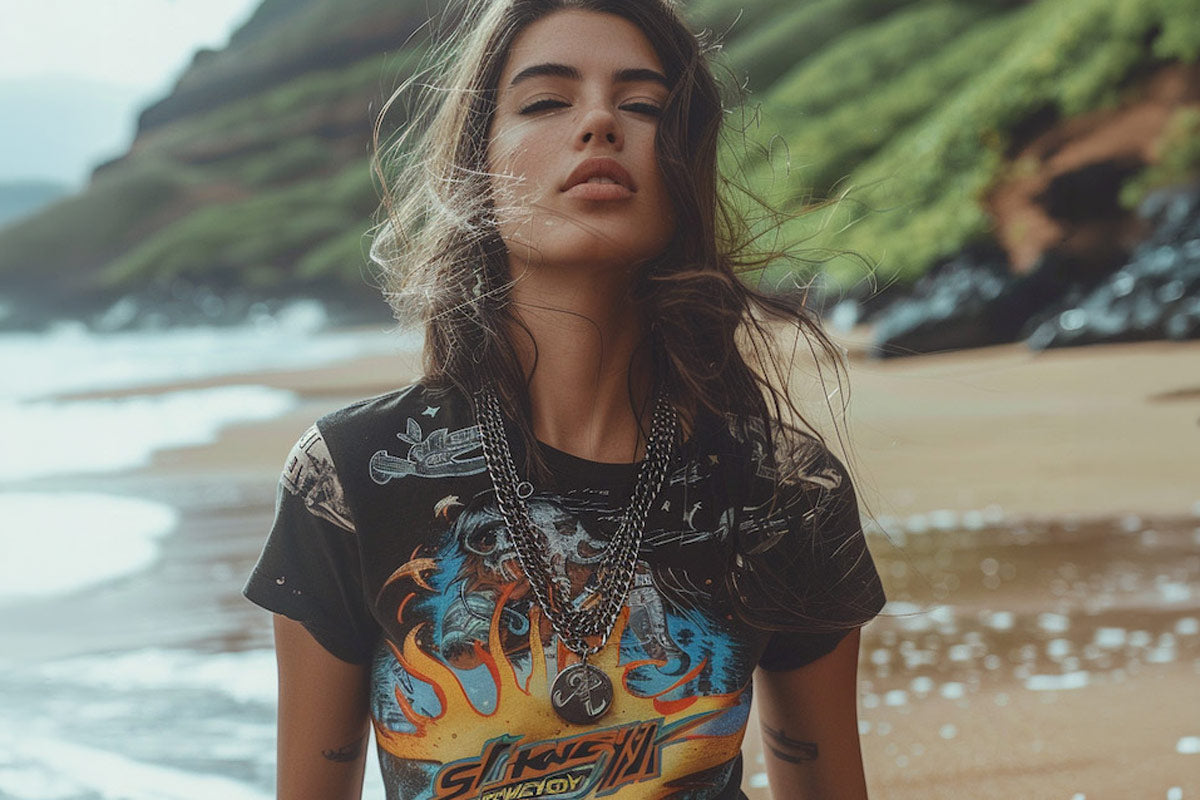
A Shirt with a Capital Tee
By Madelyn Markoe
A Shirt with a Capital Tee
A tee shirt and jeans. A classic combination with an appeal of simplicity, practicality and effortlessness. Over the decades, this humble garment has undergone not one but many transformations. Yet perhaps the most intriguing part of the story is the shape it's held while moving from all-in-one union suits to the graphic screen prints of the 60s to the runways of designer fashion houses. We might put one on every day and take for granted the amount of resources it takes to produce or how it ended up in our closet as something we refer to as a basic staple. But this undeniably essential top has an anything-but-basic history and a wildly popular ability to morph without losing the fundamental T shape. So buckle up your t-shirts and button your jeans because we're going to take a little ride through T-ime.
Though the exact year of origin is unclear, the modern t-shirt was originally marketed in the 1930s as an undershirt for bachelors who didn't know how to sew or replace buttons — and apparently didn't have a tailor either. Often an undergarment for men during the Great Depression due to its workhorse versatility, the tee didn't truly make its way from a supporting to lead role until the 1950s. Think Marlon Brando in A Streetcar Named Desire and James Dean in — well, most photographs and headshots. This rebellious shift in t-shirt wearing was also embraced by women as looser fitting clothing became more widely accepted along with a statement of fashionable dissent. By this point, it was clear the t-shirt was only getting started on the road to fame, fortune and fortitude.
The earliest printed t-shirts are rumored to have been promotional material for The Wizard of Oz and have since become valuable collectors items for screen print enthusiasts. In the 60s, rock & roll bands used custom screen printing techniques to promote their music — frequented by the likes of Janis Joplin and Jimi Hendrix. Psychedelic tie-dye became synonymous with the counterculture hippie movement of the 60s and 70s. Don Price — the advertising mogul behind Rit Dye — made hundreds of dyed shirts and gave them away at Woodstock Music Festival. Ironically, his company's marketing-focused distribution at the festival made this style of t-shirt an icon in counterculture style, later turning a huge profit for Rit Dye from a rebellion against corporate America.
The 70s also marked the creation of another icon: I ♥️ NY. A campaign developed by the New York State Department for Economic Development to shift the city's image and attract tourists, it ended up doing just that and more. Designed pro-bono by Milton Glaser as a personal act of love for his city, it is one of the most widely imitated designs we see today — a glimmering example of how a t-shirt is an extraordinary vehicle for art, free speech and business.
It's clear the beloved t-shirt is not going anywhere. This everyday necessity is now available in a variety of blends and textiles that would have Marlon Brando crying for t-shirts instead of Stella. Vintage screen prints from the 90s and beyond sell for triple digits on eBay while the likes of Gucci and Chanel run their own lines of luxury tees.
At GDC we advocate for shopping thoughtfully and intelligently. We understand there are times when tee shirts are outgrown — and we encourage you to consider donating to the Salvation Army or your local charity. Not only does this give others the opportunity to enjoy the thrills of the humble t-shirt, it helps keep over five billion tons of textile waste out of landfills annually.
And speaking of the thoughtfully made tee — we're thrilled to introduce Urban Spirit Press, our own in-house graphic tee collection. Each design is created with the same intention and artistry that has always defined Get Dressed Collective. Because a great tee is never just a tee.
Shop Urban Spirit Press →
We hope the next time you reach for your favorite t-shirt — or discover a new one with us — you see it for what it truly is: a resilient creation with the power to transform and inform. 🖤


Leave a comment
This site is protected by hCaptcha and the hCaptcha Privacy Policy and Terms of Service apply.